Pricing Your Lee County Land Or Ranch To Sell
May 14, 2026
May 14, 2026
If you price your Lee County land or ranch based on hope instead of evidence, you can lose the buyers who matter most. That is especially true in a market where buyers are still active, but more selective about access, water, improvements, and overall usability. If you are getting ready to sell, you need a price that reflects what your property can actually deliver in today’s market. Let’s dive in.
Texas rural land values improved through 2025, but that does not mean every tract should be priced aggressively. The Texas Real Estate Research Center reported that statewide rural land prices ended 2025 up 6.56% year over year to $5,214 per acre, while the Austin-Waco-Hill Country region ended 2025 up 8.15% to $7,911 per acre. At the same time, the report noted that elevated interest rates and sellers holding onto peak 2022 and 2023 expectations have contributed to longer days on market for properties without standout location or quality.
That is the key point for Lee County sellers. Regional and statewide numbers can give you context, but they do not price your specific tract. The same TRERC report makes clear that its data are not a substitute for an appraisal or a current local sales study on a particular property.
In Lee County, pricing should begin with recent comparable sales, not a countywide average and not a list price you found online. A useful comp should match your property in acreage, access, water, improvements, and overall utility. If those pieces are off, the comparison can quickly point you in the wrong direction.
That matters in a county with a large and varied rural inventory. Lee CAD’s 2025 annual report says the district handles about 39,956 parcels, including 8,639 qualified ag land parcels and 6,099 non-qualified ag land parcels. With that much variety, a small recreational tract, a legacy ranch, and a build-ready homesite should not be priced with the same lens.
Online asking prices can be helpful for a quick snapshot, but they are not proof of value. Public land platforms show Lee County asking prices around a median of $20,000 per acre on Land.com, while Acres reports 80 sold land records with a median sold price per acre of $17,043. Those figures are broad and mix tract types, but they still show why closed sales are usually the better anchor.
A property can be listed high and sit. A sold price tells you what a buyer actually agreed to pay. If your goal is to sell rather than test the market, that difference matters.
In rural real estate, not all acres are equal. Two tracts with similar size can land at very different price points depending on how usable they are on day one. In Lee County, a few property features tend to have an outsized impact.
Location is not just about being in Lee County. It is also about how a buyer gets on and off the property, how visible it is, and how practical the approach feels. Giddings is the county seat and sits at the intersection of U.S. Highways 77 and 290, about 55 miles east of Austin, which makes highway access a real market factor for many buyers.
TxDOT is actively studying the US 290 corridor in Giddings to improve mobility, safety, emergency response times, and rail conflicts. It also has a project to widen US 77 from FM 2440 in Giddings to SH 21 in Lee County. For sellers, that means frontage, turn-in quality, and ease of access near major corridors can influence value more than raw acreage alone.
Water is one of the biggest pricing variables for Lee County land. The Lost Pines Groundwater Conservation District says the district’s primary groundwater resource is the Carrizo-Wilcox Aquifer, that the Simsboro formation is present in all of Lee County and is highly productive, that the Sparta Aquifer is present primarily in Lee County, and that the Colorado River Alluvium can produce significant water near the river.
Those local water facts help explain why similar tracts can price very differently. A property with a dependable, usable water source for domestic or livestock use can command stronger pricing than one where water questions are still unresolved. Buyers are often looking beyond whether a well exists and asking how dependable it is and what it may take to keep it usable.
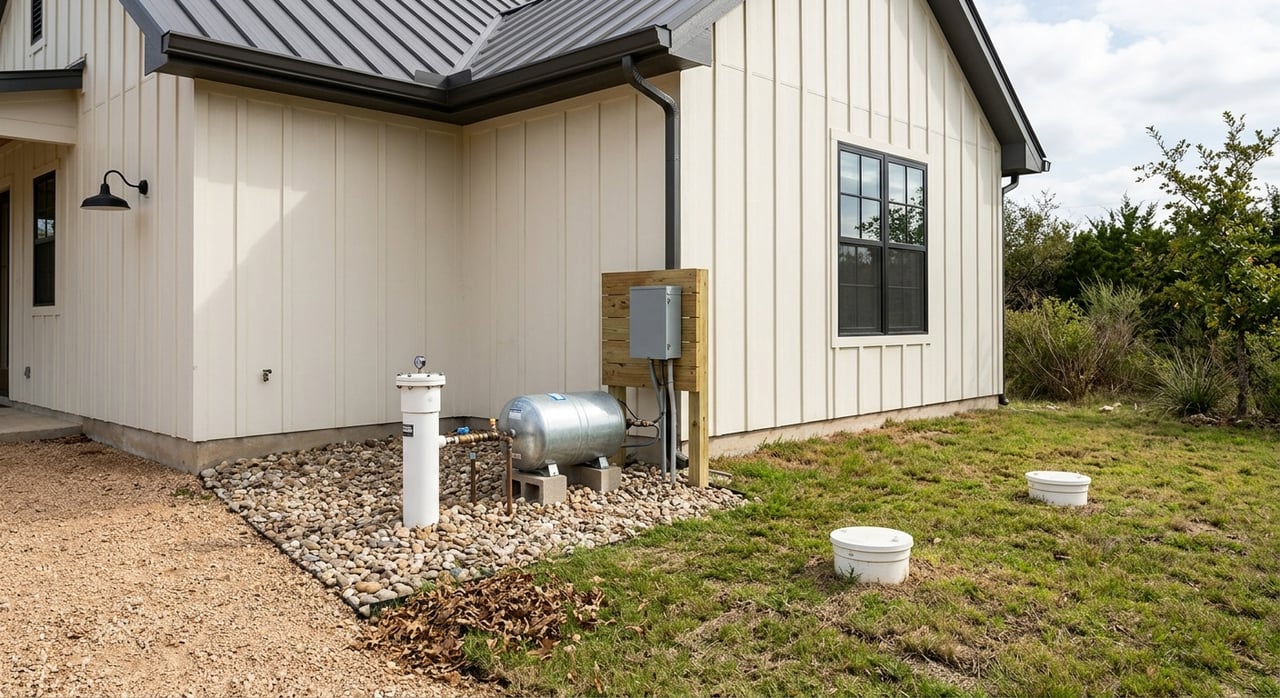
Improvements should be valued as features, not just rolled into a flat per-acre number. In Lee County, septic systems must be permitted, structures over 100 square feet require permits, and subdivision or development work in unincorporated areas needs county review. The county also requires development permits in unincorporated areas, 9-1-1 addressing before permits, and permits for driveways, entrances, structures, and culverts.
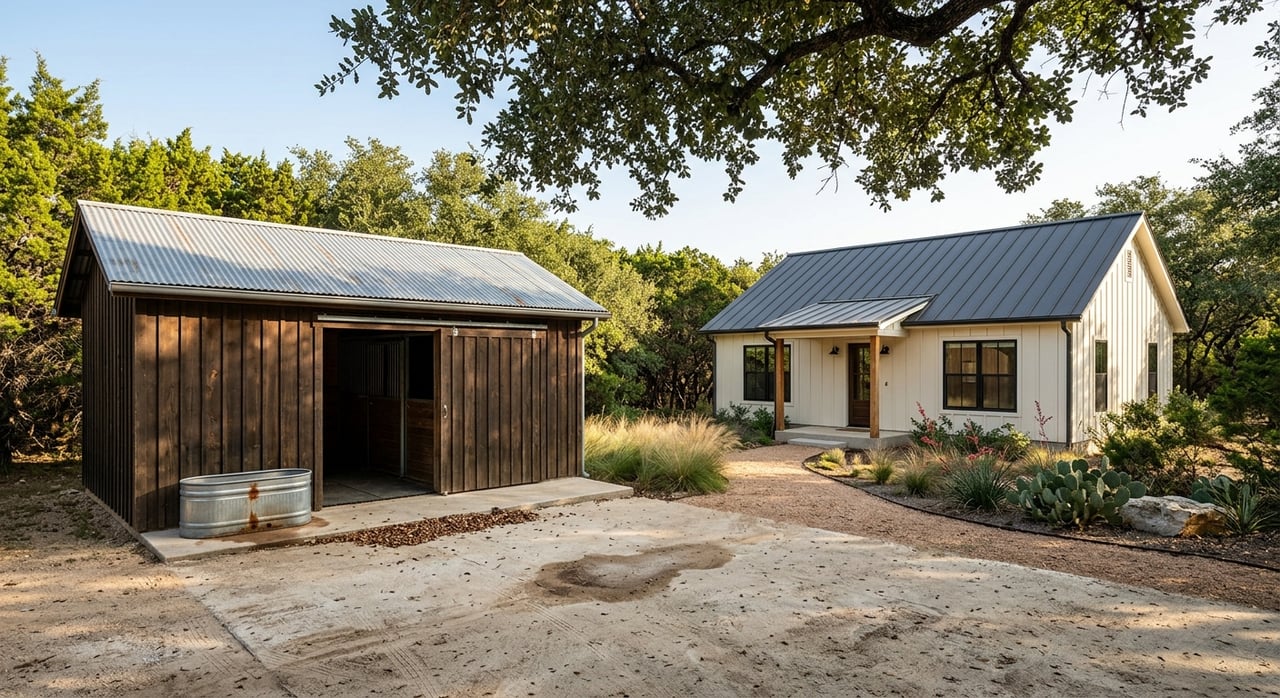
That creates a real gap between a tract that is ready to use and one that still needs major setup work. Fences, barns, sheds, driveways, culverts, septic systems, water lines, and homesites can add value, but only if they are functional, permitted, and aligned with what buyers actually want.
One of the biggest pricing mistakes sellers make is pricing for the most optimistic future use instead of the property’s best-supported current use. Buyers may see potential, but they still make offers based on what is usable, visible, and supportable today. If your tract has raw land characteristics, it usually needs to be priced as raw land with adjustments for any true value-add features.
A better approach is to separate the value into pieces. Start with the land itself, then consider what access, water, fencing, barns, septic, or build-ready status add to the package. That gives you a more realistic and defendable asking price.
This point causes confusion for many landowners. The Texas Comptroller notes that qualified open-space or ag land is taxed on productivity value rather than market value. That can help reduce carrying costs, but it should not be used as a pricing shortcut.
In other words, a favorable ag valuation may be helpful to ownership costs, but it does not tell you what a buyer will pay. Market value still comes back to location, access, water, improvements, and comparable sales.
Overpricing does not just affect your final sale number. It can also affect timing, leverage, and buyer interest. TRERC reported that properties lacking superior location or quality are the most likely to sit longer when sellers stay attached to peak pricing.
That can create a cycle you want to avoid. A property comes on too high, buyers hesitate, days on market grow, and then the listing starts to feel stale even if the land itself is solid. Pricing correctly from the start often gives you a better chance of stronger interest and cleaner negotiations.
If you want a grounded pricing strategy, focus on a few simple questions:
When you answer those questions honestly, your pricing usually gets clearer. The more usable your property is on day one, the easier it is to defend a stronger asking price. The more unknowns a buyer has to solve, the more conservative your pricing often needs to be.
Rural pricing is rarely as simple as choosing a dollar amount per acre. In Lee County, you are often weighing county permit realities, local water considerations, access quality, and a wide range of tract types. That is why a broker-led pricing review can be especially helpful for inherited land, legacy ranches, or properties with mixed improvements.
This is where practical experience matters. A clear pricing strategy should connect the facts on the ground with current closed sales, then turn that into a number buyers can understand and support.
If you are preparing to sell land or a ranch in Lee County, the goal is not to chase the highest number you can imagine. The goal is to price your property so its strengths are clear, its value is defendable, and the right buyers are willing to act. If you want help evaluating access, water, improvements, and the local sales picture, reach out to Caitlin Jacob for practical guidance built around South Central Texas land.
Stay up to date on the latest real estate trends.
Whether you’re buying your first home or selling a property, Caitlin Jacob delivers attentive service and market insight to help you achieve your real estate goals in South Central Texas and surrounding areas.